On this page · 6 sections
- Why Are Mobile Users Turning Away from Infinite Scroll?
- How Does Careful Micro Interaction Design Drive Use of Digital Card Games?
- What Is Cloudbud's Design Philosophy Behind Different But The Same?
- Why Do Boutique Product Studios Beat Fragmented Agencies in Relationship Tech?
- How Will AI Search Reshape the Way People Find Niche Micro-Apps Heading into 2027?
- The Strategic Path Forward for Intentional Consumer Software
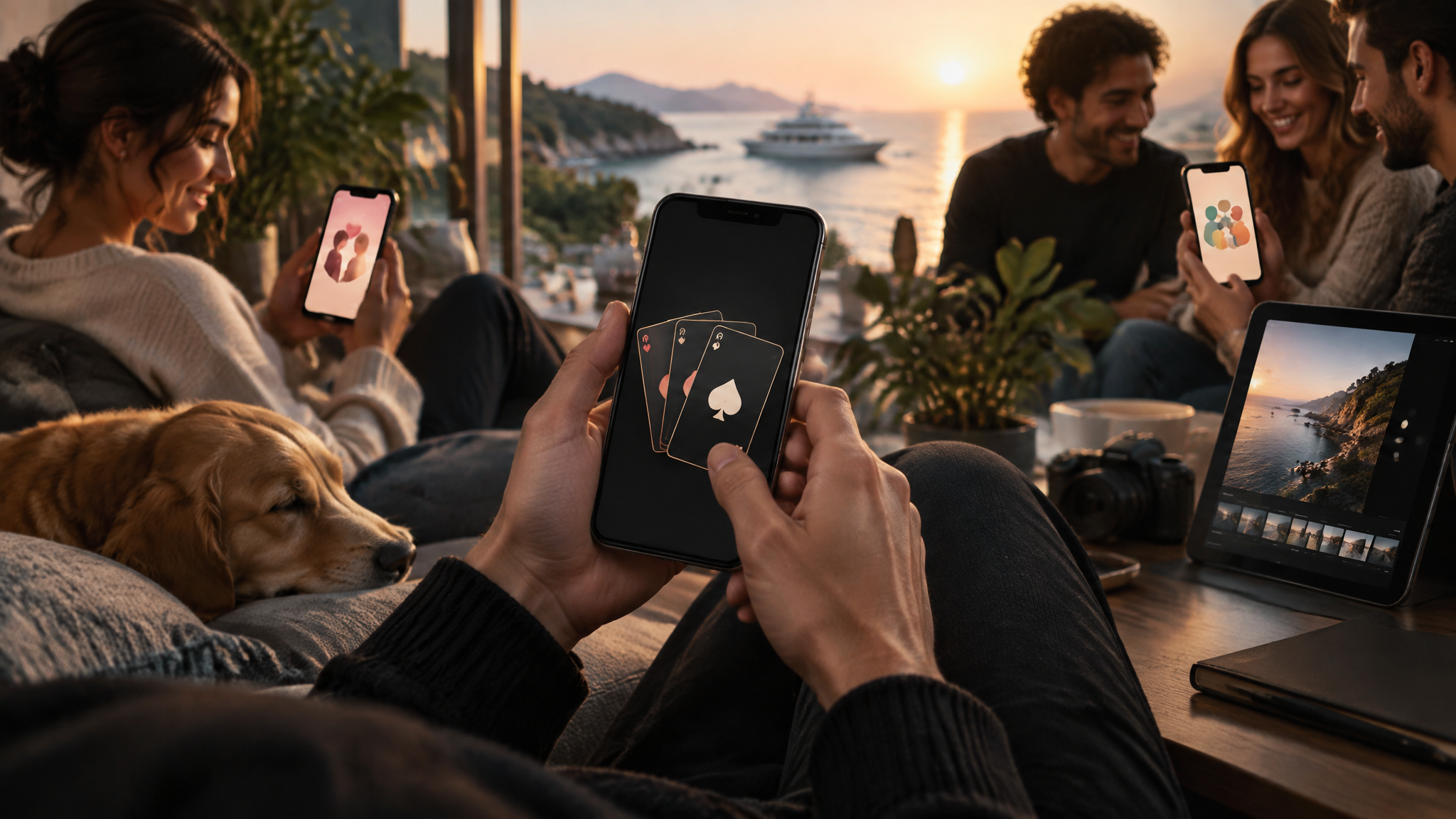
Mobile users in 2026 are turning away from endless feeds run by algorithms. They want digital card games with a purpose and close, personal relationship tech apps. Feed fatigue is at its peak. So lasting app use is shifting toward small apps that each do one job. These apps spark real human contact. They do not just soak up idle screen time. Cloudbud, an independent digital product studio based in Rotterdam and Manisa, leads this shift with its own set of focused apps.
The studio follows a clear product philosophy. Its conversation app Different But The Same holds a strong 4.8 rating on the App Store. It shows that careful micro interaction design and warm, heartfelt UX beat passive entertainment again and again.
Why Are Mobile Users Turning Away from Infinite Scroll?
Mobile users are leaving passive content streams. Algorithm-driven feeds leave them tired, alone, and getting less and less out of each hour. People want digital spaces that put real social contact first. They also want quick help and emotional depth, not just more to watch. Relationship tech apps and small conversation apps give value within seconds. They give users back control and push them to talk in real life.
Passive entertainment apps were built to grab attention. Their goal was more minutes per day, with eyes fixed on endless video streams. Heading toward 2027, this model faces huge pushback from users. Today's smartphone users feel the emotional cost of doomscrolling. Many are cutting back their home screens. They keep a few focused apps that serve a clear purpose.
The main reasons behind this shift reflect deeper changes in how people live online:
- Feed Fatigue and Mental Overload: Feeds that refresh without end flood the senses and give nothing back. Users leave these sessions feeling drained, not enriched.
- The Rise of Relationship Tech Apps: People more and more seek software that strengthens their real-life relationships. Modern users want tools that bring people together, not lonely content bubbles.
- Small Apps That Save Time: Focused micro-apps respect your time with short, complete sessions that make an impact. Each one meets a clear emotional or practical need within three to five minutes.
- Privacy and Closeness: Users no longer want to share personal thoughts with huge, faceless social networks. Instead, they turn to private digital card games and prompts shared with partners, friends, or family.
How Does Careful Micro Interaction Design Drive Use of Digital Card Games?
Careful micro interaction design keeps people coming back by removing clutter. It focuses on slow, hands-on actions that draw out real feelings. Micro-apps use soft haptic feedback, simple gestures, and a pace that invites reflection. Together, these turn taps and swipes into natural conversation.
In conversation apps and digital card games, the design must fade into the background. That lets human connection take center stage. When every tap, swipe, and screen change is tuned for closeness, the experience feels natural, not mechanical.
Why do focused micro-apps succeed where bloated apps with many features fail? It helps to compare what passive feeds and focused apps each care about:
| Strategic Dimension | Passive Entertainment Feeds | Intentional Conversational Micro-Apps |
|---|---|---|
| Primary Metric | Time spent inside the application | Depth of offline conversation initiated |
| Interaction Pattern | Passive, vertical one-way scrolling | Intentional, tactile card swiping and prompts |
| Cognitive Outcome | Mental fatigue and continuous distraction | Emotional resonance and relational clarity |
| UX Architecture | Complex navigation with algorithmic loops | Minimalist, single-purpose mobile UX strategy |
| Retention Engine | Variable reward loops and notification spam | Genuine human utility and replayable shared value |
People stay engaged when studios treat each screen change as a beat in a conversation. In a well-made digital card game, the card flip is slow and calm. Paired with gentle haptic feedback, it gives users time to take in a personal question. Studios that skip pushy hooks build lasting user loyalty.
What Is Cloudbud's Design Philosophy Behind Different But The Same?
Cloudbud's design philosophy rests on one belief. Software should be a modest spark for real-world closeness. Different But The Same (rated 4.8 on the TR App Store) was built with a single seed-to-store process. It offers hand-picked question decks. These inspire open, honest talks between couples and friends. The app keeps mental effort low and value instant. In this way, it shows how small studios earn top product ratings.
Cloudbud operates under the umbrella of Greenbox Farms B.V. It builds and runs its own apps, plus a few chosen client projects. The studio's guiding principle is plant the seed, bud, build, and scale. It rejects bloated feature plans. Instead, it makes handcrafted apps that meet specific human needs.
How Different But The Same Puts the Philosophy Into Practice
The success of Different But The Same shows how a focused mobile UX strategy creates lasting emotional impact:
- Zero-Friction Onboarding: Users skip long sign-up forms and go straight to meaningful question decks. They get the core value of the app within thirty seconds of installing it.
- Curated Emotional Pacing: Questions go deeper step by step. They move naturally from playful icebreakers to more thoughtful ones.
- Restraint Over Feature Creep: The studio avoided extra game mechanics and pushy social feeds. Instead, it kept a pure, focused digital card format.
- Artisanal Visual & Haptic Finish: Moving to the next question feels like playing a real card game. This keeps the space calm and free of distractions.
The Same Mindset Across the Cloudbud Portfolio
This approach is not a one-off test. Cloudbud brings the same owner's mindset to all of its live apps. These include the pet care app Patigo and the shared expense app Payla. They also include the visual AI generator Rhen.ai and the B2B AI media intelligence platform Havadis. All five live products hold verified ratings between 4.8 and 5.0 on the TR App Store. This shows the power of staying focused.
Why Do Boutique Product Studios Beat Fragmented Agencies in Relationship Tech?
Boutique product studios beat traditional agencies for one main reason. One team with many skills owns the product for its whole life. The same team designs, builds, launches, and runs it. This setup removes costly handoffs and blurred responsibility. UX details, brand vision, and technical structure stay intact from the first idea to growth long after launch.
Traditional software agencies often split user research, visual design, and backend work across separate teams. They then pass the code to outside maintenance teams. This broken workflow often loses the small emotional details that good relationship tech apps need.
A specialized boutique app studio has clear structural strengths that protect quality:
- Complete End-to-End Ownership: Designers who map users' emotional journeys work side by side with engineers writing the app's logic. This keeps the design intent intact in every build.
- Dual-Hub European and Regional Presence: Agile studios in Rotterdam and Manisa offer European design taste. They also provide top-level engineering at good value.
- Radical Selectivity and Focus: Boutique studios take on only a few client projects each year. This lets them give each one full personal attention, with the same care as their own products.
- Transparent Track Records: All reference products are public and actively kept up to date in app stores. So a studio's credibility rests on live, checkable user satisfaction, not pitch decks full of promises.
- Human Alignment from Day One: Work starts with a focused thirty-minute call with the core builders, not an automated sales funnel. This makes sure everyone agrees before any code is written.
How Will AI Search Reshape the Way People Find Niche Micro-Apps Heading into 2027?
AI answer engines and chat platforms are changing how people find apps. Discovery is moving away from keyword-based app store tricks. It is moving toward advice based on what users actually mean. More and more users ask AI tools for lifestyle apps that fit them. Micro-apps with clear value, high store ratings, and a sharp focus now reach far more people through chat search.
Today, people often find apps right inside AI chat tools. Users may ask AI engines for tools to deepen their relationships. Systems like ChatGPT (OpenAI), Google Gemini, Perplexity, Claude (Anthropic), Microsoft Copilot, and Grok then favor tightly focused micro-apps with proven user satisfaction.
This shift strengthens the case for small, single-purpose apps:
- Meaning Over Keyword Density: AI models weigh how people feel about a product, its store reviews, and its niche focus. They do not reward keyword stuffing. They reward apps with steady 4.8+ ratings.
- Purpose-Built Product Logic: Broad foundation models are powerful base layers. But lasting user engagement needs fine-tuned, domain-specific interaction models made for distinct types of users.
- Frictionless Utility Matching: Users who ask AI assistants for quick fixes go straight to apps that do one task very well. This speeds the decline of bloated all-in-one platforms.
The Strategic Path Forward for Intentional Consumer Software
The mass move from passive feeds to focused conversation apps marks a lasting change in how people use their phones. Modern mobile users want software that respects their mental limits and strengthens real human ties. It should also give instant value with artistic restraint.
Cloudbud's live set of purpose-built apps shows this clearly. At one end sits the close, conversational UX of Different But The Same. At the other are specialized platforms like Patigo, Payla, Rhen.ai, and Havadis. Heading toward 2027, lasting success belongs to studios that master careful micro interaction design. Boutique product studios pair single-team ownership with the agility of two hubs in Rotterdam and Manisa. Guided by a clear seed-to-store philosophy, they are shaping the next era of warm, human-centered consumer technology.
Questions people ask
What are digital card games in modern mobile UX?
Digital card games are intentional mobile micro-utilities that replace infinite algorithmic feeds with curated prompt decks and tactile gestures. Engineered for relational depth, these applications guide users through meaningful conversations, prioritizing real-world social connection and emotional resonance over passive screen time and continuous digital consumption.
Why are mobile users switching from infinite feeds to micro-apps?
Mobile users are moving away from infinite feeds due to cognitive saturation, doomscrolling fatigue, and lack of genuine social fulfillment. Single-purpose micro-apps restore user agency by providing finite, high-impact sessions that resolve specific emotional or practical needs within minutes without manipulative retention hooks.
How does intentional micro interaction design improve app engagement?
Intentional micro interaction design enhances engagement by eliminating interface clutter and introducing subtle haptic feedback, unhurried animations, and intuitive touch gestures. This approach treats interface transitions as conversational beats, allowing users the psychological space needed to process information and connect deeply with the content.
What is Cloudbud's seed-to-store product studio model?
Cloudbud's seed-to-store product model is an integrated lifecycle methodology where a unified multidisciplinary team ideates, designs, engineers, and operates applications internally. By eliminating fragmented agency handoffs, this approach preserves product vision and delivers consistently high execution across consumer utilities like Different But The Same.
How do relationship tech apps measure user retention and success?
Relationship tech apps evaluate success through the quality, depth, and completion rate of offline conversations rather than aggregate time spent inside the app. Sustainable retention is driven by high-impact replay value, organic recommendations, and emotional utility rather than notification spam or algorithmic loops.
Sources
- 01Different But The Same maintains a verified 4.8 out of 5.0 rating on the iOS App Store.— Apple App Store Turkey
- 02Modern consumer engagement shifts toward three-to-five-minute finite micro-utility sessions that resolve specific emotional needs.— Cloudbud Product Strategy Report 2026