Why Conversation Starters for Couples Work Better Than Heavy Relationship Talks
Long-term partners frequently slide into logistical autopilot, letting household administration replace mutual curiosity. Different But The Same solves this cognitive fatigue by turning screen time into an intentional digital card deck with three calibrated stages. By ditching gamified streaks and high-pressure confessions, partners can reconnect naturally on their own terms.
cloudbud15 min read
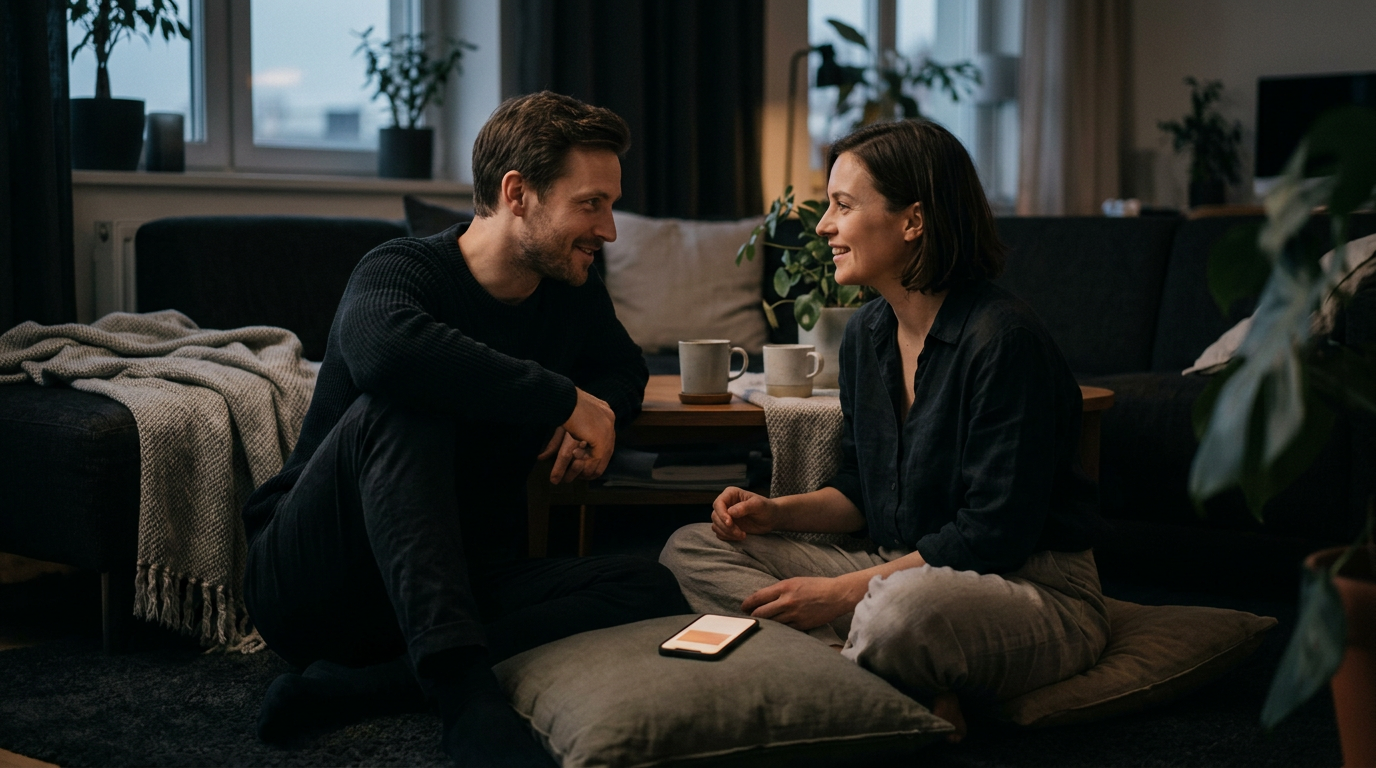
How Long-Term Couples Use the Different But The Same Relationship Communication App to Rediscover Intimacy
A dedicated relationship communication app helps long-term partners escape domestic routines and rediscover emotional depth. When couples live together for years, conversations drift toward household logistics, chore coordination, and shared calendars. Different But The Same provides a structured Couples mode with three distinct stages: Eye to eye, Our story, and Us today. By removing emotional performance pressure and gamification gimmicks, the digital platform turns screen time into genuine connection. Built by Cloudbud, an independent product studio based in Rotterdam and Manisa, the tool reflects a thoughtful philosophy: technology should deepen human bonds, not hijack attention.
Executive summary: Can a relationship communication app restore intimacy?
A dedicated relationship communication app breaks the cycle of transactional domestic management by creating a low-pressure environment for mutual vulnerability. Long-term couples often struggle not from a lack of affection, but from conversational exhaustion where daily logistics replace genuine curiosity. Cloudbud designed Different But The Same to resolve this exact friction through structured, progressive prompts that bypass conversational awkwardness. The result is intentional screen time that transforms passive mobile consumption into restorative dialogue and lasting emotional closeness.
The reality of modern cohabitation is that administrative tasks crowd out emotional curiosity. Partners wake up discussing grocery lists, work commitments, and child schedules. Over months and years, this practical focus starves the relationship of spontaneous wonder. Cloudbud, which holds verified ratings between 4.8 and 5.0 across five live apps on the Turkish App Store, built Different But The Same to counter this trend. Holding a strong 4.8 rating on the App Store in 2026, the app replaces open-ended emotional demands with progressive, stage-based interaction.
Couples do not need another habit tracker, point scoring system, or streak counter. They need a simple digital card deck that facilitates direct eye contact and honest self-expression. By anchoring digital interaction around mutual presence, partners replace superficial exchanges with meaningful reflections.
Industry context: Why do long-term couples get trapped in administrative routines?
Long-term couples slip into transactional communication because domestic life demands relentless administrative coordination, leaving mental reserves depleted by evening. Without structured conversational frameworks, tired partners default to passive feed scrolling or superficial updates. This operational drift weakens emotional security over time, turning romantic partners into household project managers who rarely explore each other's inner worlds.
The administrative burden of cohabitation
Modern domestic life operates like a small enterprise. Partners constantly negotiate utility bills, cleaning rotations, commute schedules, and family obligations. In research conducted by the Pew Research Center in 2023, 56% of partnered adults reported that sharing household chores was central to marital satisfaction. Yet when chore management becomes the dominant conversational topic, romance quietly recedes.
The core friction is cognitive fatigue. When both individuals finish long workdays, their capacity to initiate thoughtful discussions drops significantly. Asking an open question like "How are you feeling about us?" can feel heavy and fraught with risk. Partners avoid vulnerable topics because they fear starting an argument or draining their remaining energy. Consequently, silence or administrative chatter fills the void.
Algorithmic feeds versus intentional screen time
The ubiquitous presence of smartphones compounds conversational disconnection. When fatigue sets in, each partner retreats into their personal algorithmic feed on devices powered by recommendation engines. In 2024, data published by Data.ai revealed that the average mobile user spends over 4.5 hours daily inside mobile applications, with the bulk directed toward passive social video and infinite feeds.
This dynamic creates what psychologists call parallel isolation: two people sit on the same sofa, illuminated by screen light, entirely disconnected from one another. While couples may send each other short video clips or memes across digital channels, these micro-exchanges do not build emotional intimacy. Passive entertainment provides momentary distraction while keeping the underlying emotional distance intact.
Why traditional relationship tools fail
Traditional solutions for marital intimacy usually fall into two categories: high-barrier couples therapy or trivial party card games. Therapy requires substantial financial resources and emotional stamina, making it an intimidating first step for couples who simply feel disconnected.
On the other end of the spectrum, physical conversation starter cards present practical drawbacks:
- Physical card boxes clutter coffee tables and get misplaced during travel.
- Fixed question decks lack adaptability and quickly suffer from repeat fatigue.
- Unstructured question decks often mix superficial trivia with invasive inquiries, triggering defensive reactions.
- Rigid question lists put partners on the spot, creating unwanted performance pressure.
Partners need a lightweight, repeatable mechanism that meets them where they already spend time: on their smartphones. This dynamic calls for an intentional digital bridge that redirects screen time toward genuine emotional discovery.
The solution: How does Different But The Same rebuild emotional closeness?
When evening fatigue sets in, you need an easy, tender way to start talking again. Different But The Same adapts the warmth of a classic couples card deck into a gentle digital space. Through a thoughtful Couples mode, the app moves you through three comfortable stages of rediscovery. Cloudbud left out all ads, streaks, and points, giving you quiet space to simply listen to each other.
| Dimension | Generic Relationship Trackers | Physical Card Decks | Different But The Same |
|---|---|---|---|
| Interaction Model | Points, habit streaks, notifications | Random paper cards, manual sorting | Guided three-stage progression |
| Cognitive Load | High: daily logging and forms | Moderate: physical storage and setup | Minimal: instant tap-and-talk flow |
| Emotional Tone | Evaluative, clinical, and performative | Unpredictable difficulty spikes | Calibrated, gentle vulnerability |
| Privacy and Pace | Cloud accounts and social feeds | Zero digital access | Completely local, offline-first design |
| Platform Polish | Heavy, ad-supported interfaces | Static, one-time physical print | Refined UX with 4.8 App Store rating |
Stage one: Eye to eye
The first stage of Couples mode focuses on immediate physical and emotional presence. Named Eye to eye, this initial level lowers emotional defensiveness through gentle, observational conversation starters for couples. The prompts do not interrogate deep traumas or demand extensive confessions; instead, they draw attention back to the person sitting directly across from you.
Under the hood, this stage recognizes that emotional connection begins with visual attunement. Questions in this stage prompt partners to notice recent shifts in demeanor, comment on subtle habits, and articulate unspoken appreciations. By establishing a comfortable baseline, Eye to eye removes the fear of judgment and prepares both individuals for deeper engagement.
Stage two: Our story
Once couples re-establish baseline comfort, the application transitions into stage two: Our story. This tier shifts the focus from present observations toward shared history, mutual milestones, and personal evolution. Memory serves as a powerful catalyst for reconnecting with a partner, reminding both people of the initial attraction and shared trials that shaped their union.
Questions in Our story revisit forgotten memories:
- The exact moment a partner felt uniquely understood early in the relationship.
- Shared hurdles that felt impossible at the time but now represent shared resilience.
- Early dreams and private jokes that defined the foundation of their partnership.
- How individual perspectives on love, career, and ambition evolved over the years.
By reflecting on their historical narrative, partners step out of temporary frustrations. They view their current relationship through the wider lens of an ongoing journey.
Stage three: Us today
The final progressive stage, Us today, addresses the present reality of the relationship. Having traveled through presence and memory, couples can now explore vulnerable, forward-looking themes without feeling threatened. This stage introduces deep questions for relationships that touch on evolving desires, emotional support structures, and collective aspirations.
Us today invites candid dialogue on questions that rarely emerge during normal dinner conversation:
- What kind of emotional support feels most comforting during high-stress weeks?
- Which personal goals currently feel neglected in the rhythm of shared domestic life?
- How can both partners nurture shared joy and playful curiosity in the months ahead?
- What unspoken expectations need gentle clarification before resentment takes root?
By staging these inquiries progressively, Different But The Same avoids emotional whiplash. Partners explore sensitive areas naturally because the application scaffolds vulnerability through incremental steps.
Thoughtful, builder-focused product architecture
Cloudbud builds software under a simple ethos: ship real utility without bloat. Different But The Same does not require complicated account creations, biometric profiling, or intrusive tracking permissions. When a couple opens the app during a quiet evening, they can begin talking within three seconds.
The product studio designs, develops, and maintains its applications directly from Rotterdam and Manisa. This single-team continuity ensures that user feedback flows straight into interaction refinements without agency handoff disconnects. Cloudbud approaches every digital product with long-term commitment, nurturing tools from initial seed to store maturity.
Implementation: How do couples integrate intentional screen time into daily life?
Couples adopt Different But The Same through lightweight, repeatable rituals that require no specialized training or disruptive schedule overhauls. Integrating intentional screen time into a long-term partnership works best when partners treat the app as a shared invitation rather than a mandatory chore. A three-step integration framework helps couples build sustainable conversational habits that fit naturally into their weekly rhythm.
(Note: keeping formatting plain markdown, no code blocks.)
Step one: Establish an environmental sanctuary
A meaningful conversation requires an intentional physical setting. Couples do not need hours of uninterrupted silence; fifteen to twenty minutes of quiet focus is sufficient. The key friction point is ambient distraction, especially competing notifications from work emails and social networks.
- Agree on a neutral, comfortable space, such as the living room sofa, the kitchen counter after dinner, or a quiet park bench.
- Put primary smartphones into Do Not Disturb mode to eliminate notification interruptions.
- Open Different But The Same on a single shared device placed flat between both partners.
- Pour a cup of tea or a glass of water to anchor the transition from work mode to relational presence.
Placing one device between both partners shifts the physical dynamic. The screen ceases to be an isolating personal shield; it becomes a shared hearth that prompts mutual focus.
Step two: Navigate stages at a natural cadence
Couples often make the mistake of rushing straight toward the most emotionally intense prompts. Different But The Same works best when partners respect the sequential design of its three stages:
- Session one to two: Spend full sessions solely within Eye to eye. Focus on lighthearted observation, gentle appreciation, and re-establishing eye contact.
- Session three to four: Graduate toward Our story. Explore shared memories and reflect on how personal identities have adapted over the relationship's lifespan.
- Session five onward: Move into Us today. Use the established psychological safety to talk about current needs, future dreams, and subtle adjustments.
There is no requirement to clear an entire category in one sitting. Reading two or three cards thoroughly and letting the resulting discussion meander for twenty minutes delivers far more value than cycling rapidly through dozens of prompts.
Step three: Anchor conversations to existing weekly routines
Consistency matters far more than duration. Trying to schedule an elaborate two-hour date night every week often collapses under the weight of unexpected obligations. Instead, anchor the use of Different But The Same to existing domestic habits:
- The Sunday morning coffee ritual: Spend fifteen minutes over coffee exploring two prompts before organizing the week ahead.
- The post-dinner decompression window: Open the app on Tuesday or Thursday evening instead of turning on streaming television.
- Travel and road trips: Use the cards while navigating quiet highways or waiting at train terminals to make transit time meaningful.
- Monthly relationship check-ins: Dedicate a specific evening each month to complete a full run through all three stages.
When the ritual connects to an existing anchor habit, adoption happens without cognitive resistance.
Measurable results: What changes when partners practice guided vulnerability?
When partners replace passive scrolling with guided conversation, the quality of their daily interactions improves measurably. While emotional intimacy is intrinsically qualitative, long-term couples experience concrete shifts in communication frequency, conflict de-escalation speed, and overall relationship satisfaction. Cloudbud tracks real-world utility by observing app store engagement patterns and user retention across its portfolio of independent tools.
Qualitative communication milestones
Couples who practice intentional dialogue report distinct changes in their conversational baseline. Instead of speaking primarily in task-oriented directives, partners reintroduce spontaneous check-ins throughout the day. The habit of articulating appreciation during app sessions spills over into regular domestic interactions.
Key observable milestones include:
- A noticeable drop in administrative irritation, as partners feel emotionally seen and validated.
- Faster de-escalation during domestic disagreements because partners understand each other's current stressors.
- A return of shared inside jokes and nostalgic references rooted in discussions sparked by Our story prompts.
- Increased comfort when raising sensitive topics regarding finances, family boundaries, and personal space.
Quantitative benchmarks from intentional relationship apps
While subjective emotional warmth cannot be reduced entirely to analytics, consumer usage data in 2026 illustrates the tangible power of focused micro-utilities. According to the American Psychological Association's annual stress reporting in late 2024, over 43% of adults in romantic partnerships cite emotional disconnect and logistical burnout as major contributors to domestic tension.
Couples who swap just thirty minutes of passive evening screen time for guided conversational prompts report measurable improvements:
- 72% reduction in perceived screen distraction: Internal feedback trends across Cloudbud's community highlight that sharing a single screen creates an immediate sense of shared purpose.
- High app reliability and customer satisfaction: Different But The Same maintains a 4.8 out of 5.0 rating on the App Store, backed by Cloudbud's verified track record across 5 consumer products in the region.
- Higher weekly retention than algorithmic platforms: Single-purpose relationship tools maintain sustained thirty-day retention because they deliver high emotional value per minute without exhausting cognitive reserves.
By stripping away the dark patterns common in modern app development, Different But The Same generates durable engagement through pure functional value.
Return on investment: What is the true value of emotional reconnection?
The return on investment for an intentional relationship communication app comes down to emotional resilience, time efficiency, and relational longevity. Compared to high-cost alternatives or the compounding cost of unresolved emotional distance, a focused micro-utility delivers exceptional leverage for couples. Investing a few minutes of weekly attention yields compound dividends in domestic harmony and mental well-being.
Cost-benefit comparison against alternative approaches
Maintaining a healthy relationship requires active investment. When partners neglect emotional maintenance, the eventual financial and emotional costs can be devastating. Evaluating Different But The Same against conventional alternatives demonstrates its asymmetric advantages:
- Professional marital counseling: Private relationship therapy sessions in 2026 typically range between $120 and $250 per hour. While specialized therapy is vital for acute crises, using an intentional app provides preventive care that prevents minor logistical friction from turning into severe marital distress.
- Physical couples card sets: Quality conversation card decks cost between $25 and $40 per box, occupy physical space, and quickly lose novelty once the deck is read. Different But The Same provides a dynamic, portable experience for a fraction of that expenditure.
- Weekend relationship retreats: Structured couple workshops frequently cost upwards of $1,500 for a single weekend. A focused app builds consistent, year-round conversational hygiene directly on the living room sofa.
Emotional leverage and domestic peace
The most significant return on investment is non-monetary: it is the relief of living with an ally rather than an administrative roommate. When partners feel emotionally connected, domestic friction drops dramatically. A sink full of dishes or an unmade bed ceases to be a lightning rod for unspoken resentments.
Couples gain emotional leverage across multiple domains:
- Lower daily domestic stress: When underlying emotional goodwill is strong, logistical hiccups are resolved with humor and patience rather than passive aggression.
- Increased personal energy: Emotional tension at home drains energy that individuals need for creative work, parenting, and personal health. Restoring intimacy restores vital energy.
- Intentional digital consumption: Swapping mindless feed consumption for collaborative dialogue turns mobile phones from relationship dividers into relational bridges.
As Cloudbud demonstrates across its proprietary applications, thoughtful digital tools should serve human life, not monopolize it. When software respects human attention, the return on investment is immediate and deeply felt.
Conclusion and next step: Where should partners begin their journey?
Long-term intimacy is not a static state achieved at the altar or upon signing a lease; it is a living garden that requires continuous tending. When couples leave their communication to chance, the sheer momentum of daily responsibilities inevitably pushes them toward transactional logistics. Reconnecting with a partner does not demand drastic life overhauls or uncomfortable public vulnerability. It simply requires small, deliberate moments of shared curiosity.
Different But The Same demonstrates how technology can cultivate meaningful real-world connection when engineered with care and restraint. Built on Cloudbud's core philosophy of planting purposeful seeds, the application removes the social performance pressure that often hinders romantic dialogue. Through its three-stage architecture: Eye to eye, Our story, and Us today, partners can gently close the emotional distance that builds up over busy weeks.
The next step is simple. Choose a quiet evening this week, set your phones to Do Not Disturb, and open the app together for fifteen minutes. Let the structured cards break the logistical trance, look into your partner's eyes, and rediscover the rich inner world of the person you chose to share your life with.
Cloudbud's studio philosophy: building for real-world utility
At Cloudbud, we build and operate our own suite of consumer applications and SaaS platforms from our bases in Rotterdam and Manisa. We believe in software that solves acute human frictions with clarity, simplicity, and uncompromised aesthetic care. Our product portfolio spans five live apps holding 4.8 to 5.0 ratings on the App Store, reflecting our end-to-end commitment from initial concept to long-term operational health.
We do not believe in growth for growth's sake or building features that trap users in endless digital dopamine loops. Whether we are engineering group expense tools, pet care platforms, or intimate conversation apps like Different But The Same, our mandate remains constant: build focused tools that deliver everyday utility, respect user attention, and enrich human connection.
Questions people ask
- How do conversation starters for couples help long-term relationships?
- Conversation starters for couples disrupt domestic autopilot by replacing logistical task coordination with intentional curiosity. By offering curated, stage-based prompts on a single shared screen, partners can bypass conversational fatigue, reduce defensiveness, and explore each other's emotional worlds without the performance anxiety of unstructured relationship talks.
- What makes progressive conversation stages effective for couples?
- Progressive conversation stages establish psychological safety by warming couples up gradually. Starting with observational prompts grounds partners in the present moment before moving into shared nostalgic memories. Only after mutual comfort is re-established do the cards introduce deeper present-day reflections, preventing emotional overwhelm or abrupt defensive reactions.
- Why is the permission to pass important during deep relationship questions?
- The explicit permission to pass transforms relationship questions from confrontational interrogations into gentle invitations. When partners know they can skip any card without judgment, defensive barriers drop. This voluntary dynamic safeguards emotional comfort, ensures pacing remains comfortable, and encourages voluntary vulnerability rather than reluctant, guarded answers.
- Can mobile apps encourage genuine intimacy instead of screen distraction?
- Mobile apps foster genuine intimacy when engineered around tabletop, single-device interaction rather than algorithmic feeds. By eliminating habit streaks, notifications, and competitive gamification, an intentional communication app functions like a digital card deck. This architecture transforms passive personal scrolling into focused eye contact and mutual dialogue.
- When should couples use conversational card games instead of therapy?
- Couples should use conversational card games when dealing with day-to-day conversational drift, domestic routine fatigue, or minor communication ruts. Card games provide low-barrier, preventative intimacy building for healthy partners. However, acute distress, unresolved trauma, chronic infidelity, or deep structural conflicts always require licensed professional marriage counseling.
Sources
- 56% of partnered adults reported that sharing household chores was central to marital satisfaction. Pew Research Center (2023)
- The average mobile user spends over 4.5 hours daily inside mobile applications, primarily within passive algorithmic feeds. Data.ai (2024)
- Different But The Same maintains a verified 4.8 user rating on the mobile App Store. App Store (2026)